Where to Practice the Duolingo English Test?
The Duolingo English Test (DET) continues to gain traction as a convenient and cost-effective English proficiency exam. More universities and institutions worldwide now accept it, making quality preparation resources essential for test-takers looking to achieve competitive scores. This guide introduces the best practice platforms and strategies to help you master all 13 question types and excel on the 2026 DET.
Understanding the 2026 DET Format
The test assesses your English abilities through 13 different question types covering reading, writing, listening, and speaking. Each exam typically contains 45-60 questions, though the exact number varies due to the test's adaptive nature—the difficulty adjusts based on your responses, so maintaining steady performance throughout matters. The 2026 version includes updated question types like Read Naturally, along with refined scoring algorithms and stricter security protocols to ensure fair and accurate results.
The reading section features four major question types assessing comprehension and vocabulary recognition. Listening tasks include two main types that challenge your ability to understand spoken English. Writing tasks consist of three types, including the ungraded Writing Sample that goes to your target institutions. Speaking tasks comprise four types, evaluating your fluency, clarity, and pronunciation. Notably, tasks like Speak About the Photo, Read Then Speak, and both samples no longer have minimum time submission limits.
If you want to learn more about all 13 question types in detail, you can read How Many Questions in the Duolingo English Test? for a comprehensive breakdown.
Official Duolingo English Test Website
You'll find sample questions that introduce you to the test structure, plus practical information about scheduling, test-day procedures, and how long certification takes.
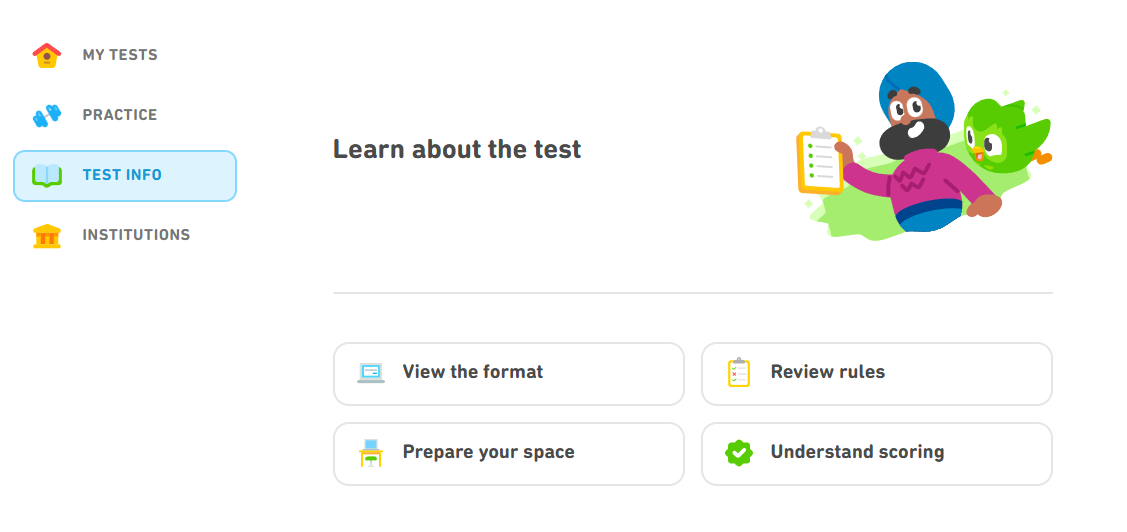
These official samples help you understand unique question formats like Read and Complete, Listen and Type, Read Naturally, and Read Then Speak. However, these materials alone won't be enough for thorough preparation—you'll need additional practice to build real competence across all question types.
DETPractice: Your Main Practice Platform
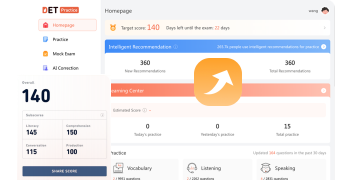
DETPractice has become a go-to resource for serious test preparation. With over 18,000 practice questions covering all 13 question types, it offers the depth of practice most students need. The platform's biggest strength is its full-length mock exams that closely replicate actual test conditions, helping you experience what those 45-60 questions feel like under timed pressure.

Taking these timed practice tests regularly helps you manage the approximately 60-minute test duration effectively and builds the stamina needed to maintain focus throughout. After each session, you get immediate feedback showing exactly where you went wrong and why. The platform also tracks your performance over time, letting you see which areas are improving and which need more work.
Many students find the performance analytics particularly useful. Instead of guessing whether you're ready, you get concrete data showing your progress in each skill area. This makes it easier to focus your study time where it counts most. Since the adaptive test means everyone gets a slightly different experience, practicing with DETPractice's extensive question bank prepares you for whatever combination of questions you might encounter.
Don't Forget Typing Speed: Typing
Here's something many test-takers overlook: typing ability matters. The entire test is computer-based, and several sections require you to type responses quickly. The writing sample gives you just 5 minutes (plus 30 seconds prep time) to compose a response, so if you're hunting and pecking at the keyboard, you're at a disadvantage.
Typing offers free lessons and timed tests to boost your speed and accuracy. Spending 15-20 minutes daily on typing practice can make a real difference. Aim for 40-50 words per minute at minimum—this lets you focus on what you want to say rather than how to type it. With no minimum time submission requirements anymore, faster typing means more time to refine your responses.
The site uses interactive exercises and games, making practice less tedious. Better typing skills won't just help on the DET; they'll serve you well throughout your academic career.
Building Your Study Routine
Effective preparation takes consistency. Set up a weekly schedule that balances different practice areas. Since real test data shows the reading section appears most frequently, dedicate appropriate time to those four question types. Don't neglect listening tasks—they're challenging for first-timers and require advance preparation.
Mix the official materials with DETPractice sessions and typing drills. Take at least one full-length mock exam weekly to simulate the 45-60 question experience. Track what's working and what isn't, then adjust accordingly. Some students need more speaking practice, others struggle with listening comprehension—your preparation should reflect your individual needs.
Remember that the adaptive nature means you can't predict exactly which questions you'll get or how many of each type. The best approach is comprehensive preparation across all 13 question types. Plan for several weeks of steady practice rather than cramming. Regular, focused sessions beat marathon study binges every time. With the right resources and a solid routine, you'll walk into test day confident and prepared for whatever the adaptive algorithm throws at you.